

EB-1 Retrogression: When Can You File for Your Green Card? Part 2

Audio

EB1 Retrogression – The Latest – Part 2
EB-1 Retrogression: When Can You File for Your Green Card?
In this guide, we continue our explanation of EB-1 retrogression and how it may affect the processing of EB-1 Green Card applications for Aliens of Extraordinary Ability. Understanding how visa caps, priority dates, and the Visa Bulletin work is critical to planning your immigration strategy effectively.
Who We Are and Why Retrogression Matters
The Law Offices of Chris M. Ingram focuses exclusively on high-level immigration cases, including EB-1 Green Cards. For decades, we’ve successfully guided clients through complex USCIS challenges, regardless of political or policy changes.
Under U.S. law, USCIS is authorized by Congress to issue up to 40,000 EB-1 Green Cards per year. For many years, this annual cap rarely affected EB-1 applicants. Most petitions were approved and followed immediately by Green Card filings without delay.
That has changed.
As demand for EB-1 Green Cards has increased, retrogression has become a real factor in the timing of when applicants can file for permanent residence.
Is There a Cap on Filing an EB-1 Petition?
No. There is no limit on how many people can file an EB-1 petition (Form I-140).
Anyone who qualifies as an Alien of Extraordinary Ability may file a petition at any time. This is why we strongly encourage eligible individuals to start building and filing their EB-1 petitions as soon as possible. Delaying this step can directly delay your ability to apply for a Green Card later.
For individuals currently in the U.S. on a temporary visa, waiting too long can also place lawful status at risk.
The Two-Step EB-1 Green Card Process
Understanding retrogression starts with understanding the two-step EB-1 process:
Step 1 – File the EB-1 Petition
You file an EB-1 petition to be formally recognized by USCIS as an Alien of Extraordinary Ability. Approval of this petition makes you eligible to apply for a Green Card.
Step 2 – File the Green Card Application
Once the EB-1 petition is approved, you may file your Green Card application only if visa numbers are available.
The annual 40,000-visa cap applies only to Step 2, not Step 1.
If the cap has already been reached, your Green Card filing must wait until additional visas become available.
Adjustment of Status vs. Consular Processing
Once your EB-1 petition is approved and visas are available:
- Inside the U.S.: File Form I-485 (Adjustment of Status)
- Outside the U.S.: File Form DS-260 through a U.S. consulate
If retrogression is in effect and no visas are available, neither form can be filed. USCIS or the consulate will return the application unprocessed.
This situation is frustrating but affects applicants nationwide and is not caused by individual case issues.
EB-1 Retrogression Compared to EB-2
Retrogression is not new in U.S. immigration. EB-2 applicants, especially from India and China, often wait 8–10 years due to high demand.
For EB-1 applicants, retrogression is relatively new and far less severe:
- India and China: Approx. 1–2 years
- Rest of the world: Often 3–6 months
While delays can still be frustrating, EB-1 remains the fastest employment-based path to permanent residency.
What Is Retrogression, Simply Explained?
Retrogression occurs when:
- Your EB-1 petition is approved
- You are eligible for a Green Card
- But the annual visa quota has been reached
When this happens, your case enters a queue based on your Priority Date, which determines when you can move forward.
How Priority Dates Work
When USCIS receives your EB-1 petition, they issue a receipt notice confirming:
- USCIS has accepted your case
- The filing date
- Your Priority Date
Your Priority Date is your place in line for a Green Card.
To track progress, applicants must monitor the Visa Bulletin, published monthly by the U.S. Department of State.
May 2025 Forecast of Visa Availability
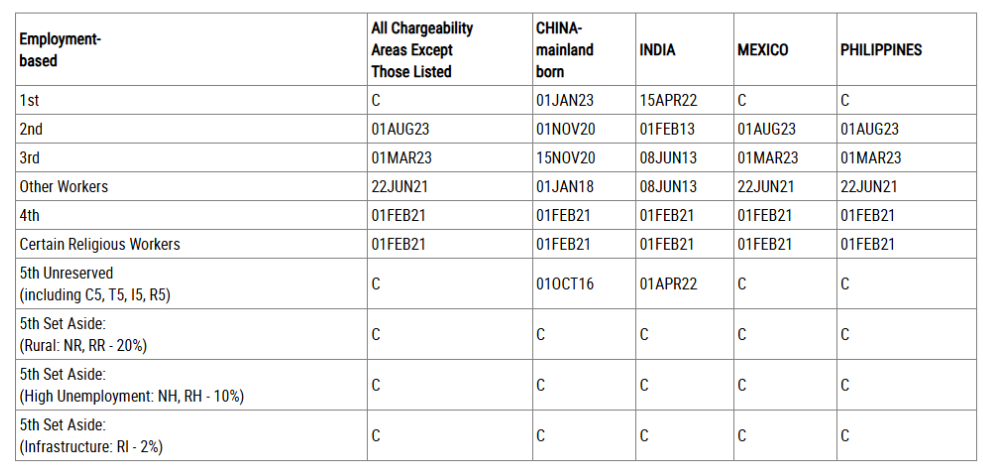
Reading the Visa Bulletin Correctly
In the Visa Bulletin:
- “C” (Current) means no backlog
- If your Priority Date is earlier than the listed date, you may file
- If it’s later, you must wait
For example, as of October 1, 2025, USCIS projects that EB-1 applicants from India with Priority Dates on or before April 15, 2022 may file their Green Card applications.
B. Dates for Filing of Employment-Based Visa Applications
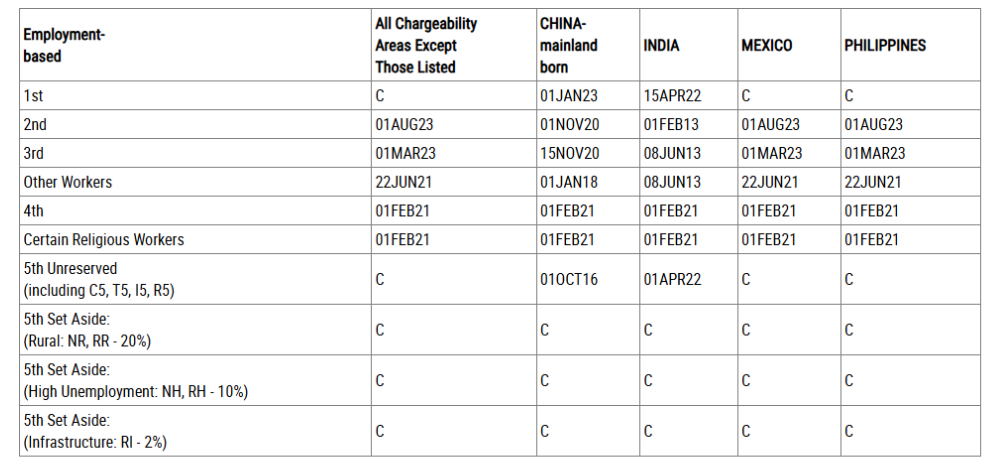
A. Final Action Dates for Employment-Based Preference Cases

Dates for Filing vs. Final Action Dates
USCIS alternates between two charts:
- Dates for Filing Applications (DFA)
- Final Action Dates (FAD)
Which chart applies depends on visa demand at that time. Applicants must always confirm which chart USCIS is using before filing.
Porting Priority Dates from EB-2 to EB-1
Applicants with approved EB-2 petitions may reuse their older Priority Dates for EB-1 if it benefits them.
This is especially helpful for Indian and Chinese nationals who have waited years under EB-2 retrogression. In some cases, porting an earlier Priority Date allows immediate Green Card filing after EB-1 approval.
USCIS also permits the use of Labor Certification dates as Priority Dates in certain EB-2 cases.
Annual Quota Reset and Why Filing Early Matters
Each October, a new allocation of 40,000 Green Cards becomes available for EB-1, EB-2, and EB-3 categories.
While past resets have cleared retrogression temporarily, demand often fills quotas quickly. Filing early gives you a stronger Priority Date position, even if retrogression occurs later.
Final Thoughts and Next Steps
Retrogression is a system-wide issue, not a reflection of case quality. If retrogression is causing hardship, interim options such as the O-1A visa may help bridge the gap.
If you are affected by EB-1 retrogression, we encourage you to schedule a free consultation so we can assess timing strategies and alternatives.
Comments on this entry are closed.