

STEM Immigration Pathways and Opportunities in the United States
Can Visa Barriers Become STEM Breakthroughs?
STEM Immigration Pathways and Opportunities in the United States
Are you a STEM graduate or professional dreaming of unlocking opportunities in the United States, but unsure how to navigate visas, evolving policies, and ongoing uncertainty?
For international students and professionals in science, technology, engineering, and mathematics, immigration is not just paperwork; it shapes where you can study, work, research, and innovate. Whether you are pursuing an education on an F-1 visa, extending your stay through Optional Practical Training (OPT) or STEM OPT, competing for an H-1B, or planning a long-term future through employment-based permanent residence, each step requires strategy and timing.
This presentation brings clarity through real stories, policy breakdowns, and practical insights. We begin with the inspiring journey of Omar Yaghi, whose refugee beginnings led to a Nobel Prize–winning scientific career. We then examine recent U.S. immigration developments, including the weighted H-1B selection system. Next, we unpack USCIS policy changes affecting filings, employment authorization, and student status. Finally, we explore the connection between immigration and the U.S. economy, highlighting how STEM immigrants drive innovation and growth.
Throughout, the focus remains on resilience, preparation, and forward momentum, turning uncertainty into informed action.
Story 1 – Omar Yaghi: From a Refugee Beginning to Becoming a Nobel Prize Winner
Omar Yaghi was born on February 9, 1965, in Amman, Jordan, into a refugee family displaced by the 1948 conflict. His parents, Palestinians with little formal education, lived with their children in a single crowded room, often sharing space with livestock. His father worked as a butcher, and the household lacked consistent electricity and running water.
At age 10, Yaghi wandered into a library and became fascinated by a book filled with illustrations of molecules, simple stick-and-ball drawings that sparked his curiosity, even though he did not yet understand their meaning. That moment planted the seed for a lifelong pursuit of science.
At 15, encouraged by his father to seek opportunity, Yaghi traveled alone to the United States on an F-1 student visa, arriving in Troy, New York, with limited English and little money. He enrolled at Hudson Valley Community College, balancing remedial coursework in English, math, and science while working jobs such as grocery bagging and floor cleaning to support himself.
He later transferred to the State University of New York at Albany, graduating cum laude with a bachelor’s degree in chemistry in 1985. He earned his PhD from the University of Illinois at Urbana-Champaign in 1990 under chemist Walter Klemperer and completed postdoctoral research at Harvard University.
Yaghi’s academic career included positions at Arizona State University, the University of Michigan, UCLA, and, since 2012, UC Berkeley. There, he holds the James and Neeltje Tretter Chair in Chemistry and directs the Berkeley Global Science Institute and the Bakar Institute of Digital Materials for the Planet.
His groundbreaking work in reticular chemistry led to the creation of metal-organic frameworks and covalent organic frameworks, porous materials with applications in gas storage, carbon capture, water harvesting, sensors, and drug development. His research has earned more than 250,000 citations, an h-index of 190, over 60 U.S. patents, and honors from 17 countries.
In 2025, Yaghi shared the Nobel Prize in Chemistry with Susumu Kitagawa and Richard Robson for pioneering this field.
Heiner Linke, Chair of the Nobel Committee for Chemistry, stated that metal-organic frameworks offer “previously unforeseen opportunities for custom-made materials with new functions.” Anne Baranger, interim dean of UC Berkeley’s College of Chemistry, emphasized Yaghi’s commitment to mentoring and global outreach.
Reflecting on his journey, Yaghi said:
“Science is the greatest equalizing force in the world… Smart people, talented people, skilled people exist everywhere.”
Attorney Chris M. Ingram adds that international STEM students can transition from F-1 status by leveraging OPT, pursuing O-1 status for extraordinary ability, or obtaining H-1B sponsorship through academic institutions.
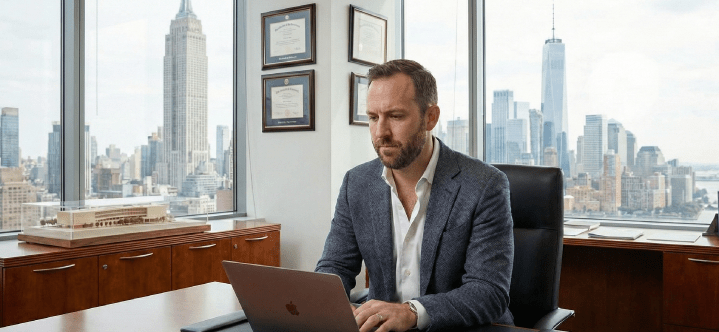
Story 2 – Recent U.S. Immigration Developments Affecting STEM Professionals
U.S. immigration policy continues to evolve in ways that directly affect STEM careers. On December 23, 2025, the Department of Homeland Security finalized a weighted selection system for H-1B visas, effective for FY 2027 registrations beginning in March 2026. This replaces the random lottery with a system prioritizing higher wage levels.
The system relies on Occupational Employment and Wage Statistics (OEWS) data from the Bureau of Labor Statistics. Wage levels are divided into four tiers reflecting experience and responsibility. For example, software developers at Level 1 earn approximately $90,000 annually, while Level 4 professionals earn about $150,000.
Higher wage levels receive greater selection weight, increasing the odds for advanced roles in artificial intelligence, engineering, semiconductors, and biotech.
Additional developments include expanded social media vetting for H-1B applicants and students, increased visa interview requirements, and a $100,000 fee for certain new H-1B petitions filed from outside the U.S. after September 21, 2025, with national interest exemptions.
A presidential proclamation effective January 1, 2026, also imposes new entry restrictions on nonimmigrant workers from 39 countries, potentially impacting STEM talent flows.
USCIS spokesperson Matthew Tragesser stated that the prior lottery system had been “exploited and abused.” Economist Tarek Hassan notes that immigrants “boost innovation and wages, and help attract foreign investment.”
Story 3 – USCIS Policy Changes and Filing Implications
USCIS policy updates introduce new compliance considerations for STEM professionals. The weighted H-1B rule takes effect February 27, 2026, prioritizing higher-wage petitions. Biometrics and online vetting now play a larger role in employment-based adjudications.
Fee changes include an increase in the H-1B registration fee to $215 and mandatory electronic payments for Form I-129. USCIS has also ended the 540-day automatic extension for certain employment authorization renewals, though OPT and STEM OPT retain 180-day extensions.
Proposals to replace “duration of status” with fixed admission periods for F-1 students could tighten oversight of academic progress, and future rulemaking may restrict OPT eligibility.
Economists warn of consequences. Gordon Hanson of UC San Diego notes that the U.S. attracts immigrants highly inclined toward STEM training. Michael Clemens cautions that a sustained decline in foreign STEM graduates could have a substantial economic impact.
Attorney Chris M. Ingram advises aligning job duties with accurate wage levels to maximize H-1B selection odds and avoid misclassification.
Story 4 – U.S. Economy and the Role of STEM Immigration
STEM immigration plays a central role in U.S. economic growth. Immigrants earn over half of advanced STEM degrees and found many high-growth startups. Skilled immigration boosts productivity, wages, and long-term GDP while supporting innovation in AI, engineering, and biotech.
Analyses suggest that prioritizing high-skilled immigration could increase GDP by 4.6% over several decades, while restrictive policies risk talent shortages and slower growth.
Penn Wharton analysis concludes that immigration leads to greater innovation and occupational specialization. Tarek Hassan reiterates that immigrants enhance wages and attract investment.
Attorney Chris M. Ingram explains that the EB-2 National Interest Waiver (NIW) allows qualified STEM professionals to self-petition for green cards when their work advances U.S. interests, particularly in clean energy, healthcare, and advanced technology.
Conclusion – Turning STEM Immigration Challenges Into Opportunities
From Omar Yaghi’s journey from refugee to Nobel laureate, to evolving visa systems and economic realities, one theme is clear: the U.S. continues to rely on global STEM talent, even as pathways become more complex.
Success depends on preparation, tracking USCIS updates, aligning roles with wage data, protecting status, and pursuing long-term strategies early. While the system is imperfect, it continues to adapt in response to innovation needs.
Attorney Chris M. Ingram offers this closing perspective:
“Your STEM dreams are not just personal; they fuel a nation built on diverse brilliance. Persistence, planning, and purpose make the difference.”
If you’re navigating these pathways, the next step is not hesitation, it’s informed action.
Comments on this entry are closed.