

Will 2026 Speed Up Your Green Card?
Is 2026 a Green Card Year?
Will 2026 Speed Up Your Green Card?
For STEM graduates and professionals, U.S. immigration is rarely a single decision. It is a long-term professional journey shaped by employer demands, federal enforcement, and economic forces. From the code that built Instagram to the city halls of New York, the immigration landscape is shifting. But amid headlines about “Gold Cards” and rising fees, a critical question remains: what is fact, and what is fiction?
This page breaks down four interconnected stories shaping the future of international STEM professionals in the United States. We separate verified policy from speculation and examine the real numbers affecting your career. Everything leads to one question every international professional is asking right now: Will 2026 speed up your green card?
Story 1: The Instagram Blueprint
For Mike Krieger, the Brazilian-born co-founder of Instagram, success in Silicon Valley was not the result of shortcuts or loopholes. It followed a lawful, disciplined blueprint for STEM immigration success. Krieger’s journey is one of the clearest public examples of how immigrant talent shapes the U.S. technology ecosystem through established immigration pathways.
Rather than relying on exceptions, Krieger used education as a stabilizing force. He earned a degree in Symbolic Systems at Stanford University, a multidisciplinary field combining artificial intelligence and cognitive science. This background aligns with what U.S. immigration law defines as a specialty occupation requiring deep technical expertise.
Before Instagram’s acquisition by Facebook, Krieger followed the standard progression: lawful work authorization and hands-on experience at a startup called Meebo. His success was built on structured engineering decisions made under real-world constraints, reinforcing why immigrants are disproportionately represented among technical leaders.
Krieger has publicly stated:
“Being an immigrant has shaped the way I see the world and the way I think about building products.”
Attorney Chris M. Ingram explained that lawful immigration paths still matter, even in a market obsessed with hacks:
“Stories like Mike Krieger’s remind us that immigration law works best when it allows talent to grow over time. The real value comes from sustained contribution, not shortcuts or exceptions.”
Krieger’s story highlights individual success, but immigration outcomes are also deeply influenced by location.
Learn more about employment-based green card strategies here.
Local Leadership vs. ICE
Although immigration law is federal, local leadership shapes daily life for international professionals. Syracuse, New York, has become a key case study in how cities balance federal enforcement with economic needs. The city relies heavily on foreign-born professionals working in engineering, healthcare, and data analysis.
When federal enforcement intensifies, it can create fear and disengagement that disrupts universities and healthcare systems, driving the regional economy. Mayor Sharon Owens has addressed this directly, framing immigration not as ideology but as economic necessity.
She has emphasized that livability for STEM professionals goes beyond salary. Stability means trusting public services and enrolling children in school without fear. Owens stated publicly:
“The diversity of this city is what makes us the best that there is.”
Attorney Chris M. Ingram noted that local climate matters even for federal visa holders:
“Immigration law is federal, but its real-world impact is always local. When communities prioritize trust and stability, professionals are better positioned to comply with the law and contribute meaningfully.”
Even the most welcoming cities, however, cannot protect professionals from misinformation.
Rumors vs. Reality
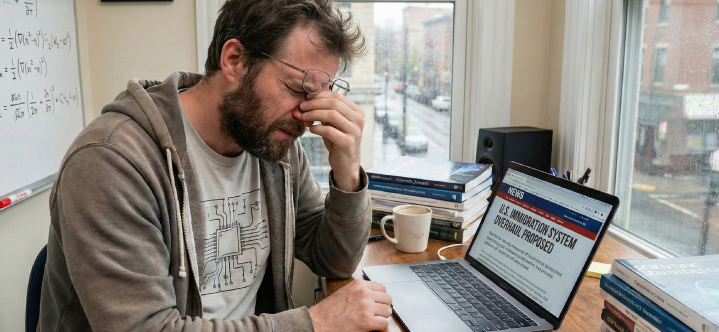
Recent months have produced widespread anxiety surrounding visa access. Federal authorities have increased emphasis on compliance and security screening, creating ripple effects across universities and technology hubs.
Some developments are no longer speculative. The “Gold Card” program is real, and the $100,000 H-1B entry restriction fee is an established policy. Rising costs are now part of statutory law, not simply a result of inflation.
More importantly, the Department of State retains authority to revoke visas for even minor violations, a power actively exercised to protect national security. Compliance is no longer optional; it is the only safety net.
The Department of State has consistently warned:
“A visa does not guarantee entry and may be revoked at any time under law.”
Attorney Chris M. Ingram clarified that enforcement does not mean exclusion:
“Strong enforcement and lawful immigration are not opposites. The system works best when rules are clear, applied consistently, and understood by those who rely on them.”
Story 4: The 2026 Shift
As of January 2026, the green card backlog shows modest but meaningful movement. The latest Visa Bulletin reflects forward progress for EB-1 and EB-2 categories for countries outside India and China.
The most significant change is procedural. USCIS has expanded the use of “Dates for Filing,” allowing many STEM professionals to submit adjustment of status applications earlier. This enables applicants to receive work authorization and travel documents while waiting for final green card approval.
USCIS has also improved coordination with the Department of State to reduce wasted visa numbers, a long-standing issue that previously worsened delays. While per-country limits remain, expanded premium processing and digital case management aim to reduce administrative friction.
Federal agencies have noted:
“Operational improvements… reduce administrative friction and improve predictability.”
Attorney Chris M. Ingram emphasized the real-world impact:
“When timelines become clearer, professionals can plan careers instead of putting their lives on hold.”
Final Answer: Will 2026 Speed Up Your Green Card?
The answer is yes, but not through magic. Speed comes from efficiency.
From Mike Krieger’s structured career path, to Syracuse’s local stability, to USCIS operational improvements, the system increasingly rewards preparation. Faster progress comes from filing earlier, using expanded Dates for Filing, securing work permits sooner, and navigating a system that is coordinating better to prevent wasted visas.
Resilience is not about enduring uncertainty blindly. It is about acting on verified facts.
If you want clarity on how these 2026 changes apply to your situation, you can start your visa journey today and book a free consultation with the Law Offices of Chris M. Ingram.
Your American journey should not be a guessing game. Take control of your timeline.
Comments on this entry are closed.